
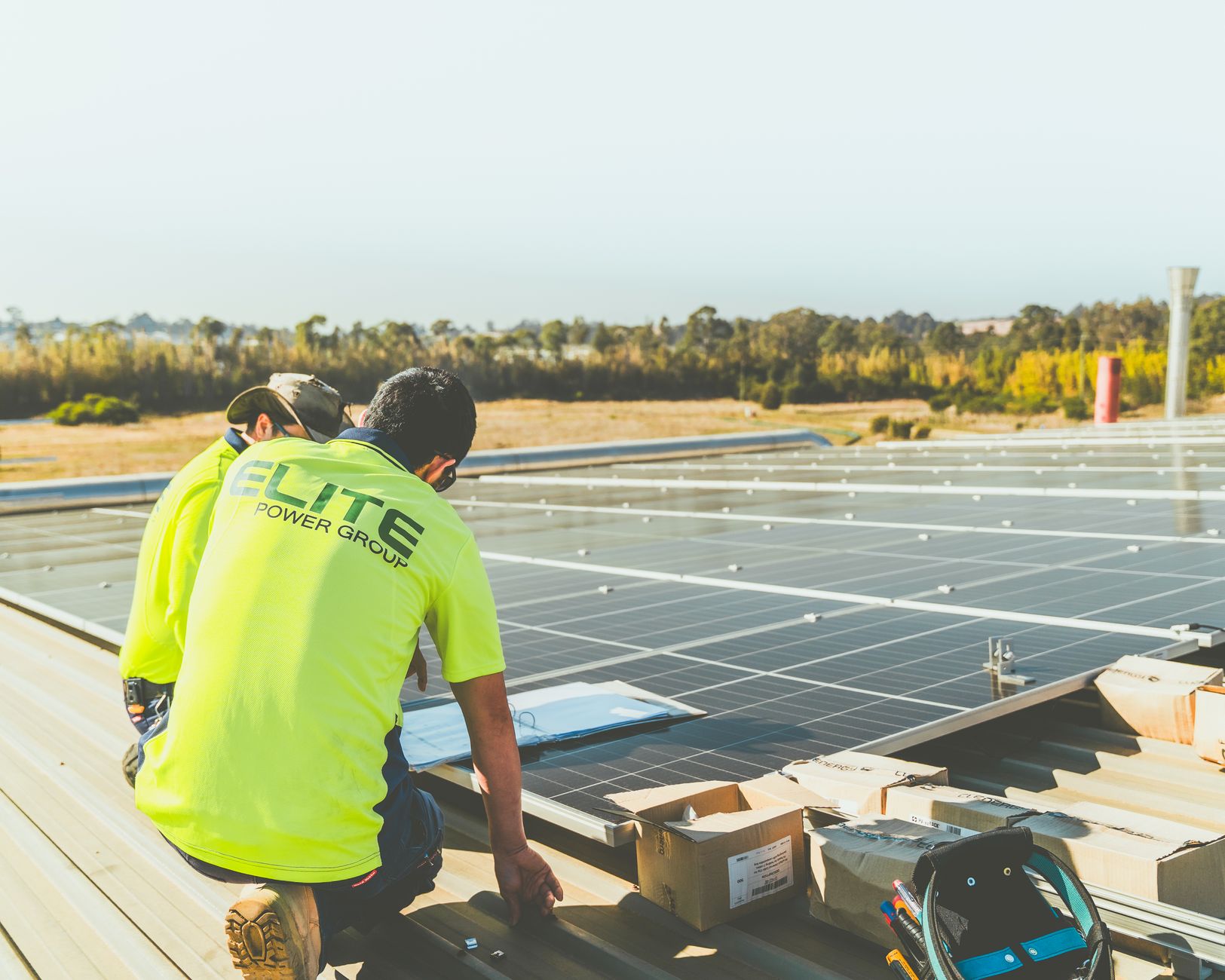
Brighte operates in a space most fintech founders overlook: the financing gap between a homeowner who wants solar panels and a bank that won't write a small, unsecured loan quickly enough. The Sydney-founded company has spent the past several years building a buy-now-pay-later style lending platform specifically for clean energy and home improvement purchases, connecting consumers directly with a network of accredited installers. It isn't the most glamorous fintech story in Australia, but it's one of the more durable ones.
What Brighte actually does
Brighte offers point-of-sale finance that installers present to customers at the time of sale. A homeowner agreeing to a solar or battery installation can apply for Brighte finance in minutes, with the installer completing the paperwork on site. Brighte then pays the installer directly and manages the consumer loan. The model removes the friction of a customer having to arrange their own finance through a bank, which is often slow and sometimes unsuccessful for smaller loan amounts.
The company's core products include interest-free payment plans, standard personal loans for larger purchases, and a green loan product aimed specifically at energy efficiency upgrades. Brighte also launched a virtual power plant partnership capability, connecting battery owners into grid services. That move reflects a broader ambition: Brighte wants to be infrastructure for Australia's residential energy transition, not just a lender sitting at the edge of it.
Beyond consumer finance, Brighte has built a vendor marketplace where accredited trade businesses can list services and acquire customers. The marketplace gives Brighte a second revenue stream and strengthens the installer relationship, which is the true distribution channel for the lending product. Without the installer network, Brighte has no sales force. The company understands this and has invested heavily in keeping that network loyal.
The funding history and investor backing
Brighte raised a $100 million Series D round in 2021, led by Grok Ventures, the investment vehicle of Atlassian co-founder Mike Cannon-Brookes. That backing is more than a capital injection: it signals conviction in Australia's residential clean energy opportunity from one of the country's most prominent technology investors. Earlier backers include Skip Capital and Entrée Capital.
The company has facilitated over $3 billion in finance since founding, across more than 120,000 customers and a vendor network that spans thousands of accredited businesses. Those numbers make Brighte one of the more substantial clean energy fintech operations in the Asia-Pacific region, even if it doesn't carry the profile of louder ASX-listed names.
The choice to stay private matters. Brighte isn't under the quarterly earnings pressure that shapes strategy at companies like Zip Co, which survived the buy now, pay later shakeout but now faces intense scrutiny on every margin and growth metric. Brighte's investors appear comfortable with a longer build, and the clean energy policy tailwinds in Australia give the company genuine runway to grow before any liquidity event.
Why the clean energy angle is a genuine moat
Brighte isn't a general-purpose consumer lender that happens to finance solar. The entire underwriting model, installer network, vendor tools, and product design are built around energy and home improvement. That vertical specificity creates defensibility. A bank entering this space needs to replicate the installer relationships and the point-of-sale workflow from scratch. A general BNPL player would need to build the domain expertise and the accreditation infrastructure.
Australia's rooftop solar penetration is the highest in the world per capita. Millions of households already have panels, and battery adoption is accelerating as feed-in tariffs decline and electricity prices stay elevated. Brighte sits directly in the path of that upgrade cycle: homeowners who installed solar five or six years ago are now candidates for battery storage, EV chargers, and efficiency retrofits. Each of those is a new finance opportunity flowing through the same installer network.
The regulatory environment is also moving in Brighte's favour. Government rebate schemes at the state level, the federal Household Energy Upgrades Fund, and ongoing interest in reducing household emissions have all increased consumer awareness and purchase intent for the products Brighte finances. Policy risk runs the other way too: a change in government or a scaling back of rebates could dampen demand. But the structural shift in Australian energy prices makes residential clean energy economics largely self-sustaining at this point, independent of subsidies.
The technology layer underneath the lending
Brighte has invested in its own technology platform rather than relying on off-the-shelf lending software. The installer-facing app handles quoting, application submission, and loan documentation in a single workflow. The consumer-facing experience is built for mobile-first approval decisions. Underwriting is automated, drawing on credit bureau data and a proprietary model trained on the company's own loan book.
That internal build gives Brighte control over the product iteration cycle. Changes to the installer experience don't require a vendor dependency. New loan products can be launched without renegotiating a software licence. For a company whose distribution depends entirely on installer satisfaction, the ability to improve the tool quickly is operationally critical.
The data Brighte accumulates is also strategically valuable. Loan performance data segmented by technology type, installer, geography, and product age gives the company visibility that no bank's general lending book can match. It's a similar dynamic to what Carsales has built in auto data, where the depth of domain-specific information compounds into a genuine advantage over generalist competitors.
Where the risks sit
Consumer credit quality is the most direct risk. Interest-free products carry margin pressure, and the economics depend on volume and low default rates. A sustained rise in unemployment or a household income squeeze could push arrears higher in a loan book concentrated on discretionary-ish purchases. Brighte has managed this so far, but the macroeconomic environment since 2022 has tested every consumer lender's credit assumptions.
Installer quality is the second risk. Brighte's brand is only as good as the installers presenting its products. A rogue installer causing consumer harm, or a pattern of poor-quality installations linked to Brighte-financed jobs, would damage trust in the platform fast. The company manages this through an accreditation process, but quality control at scale across thousands of trade businesses is genuinely hard.
Competition is intensifying. Commonwealth Bank, ANZ, and specialist lenders have all deepened their clean energy lending products. The federal government's Household Energy Upgrades Fund, administered through participating lenders, also puts government-backed capital into the same market. Brighte's advantage is the installer network and the embedded point-of-sale experience, but that advantage requires constant maintenance.
For now, Brighte occupies a well-defined position in a market that isn't going away. The company turns the complexity of residential clean energy finance into a workflow that takes minutes, for installers and homeowners alike. That is a harder thing to replicate than it looks.