
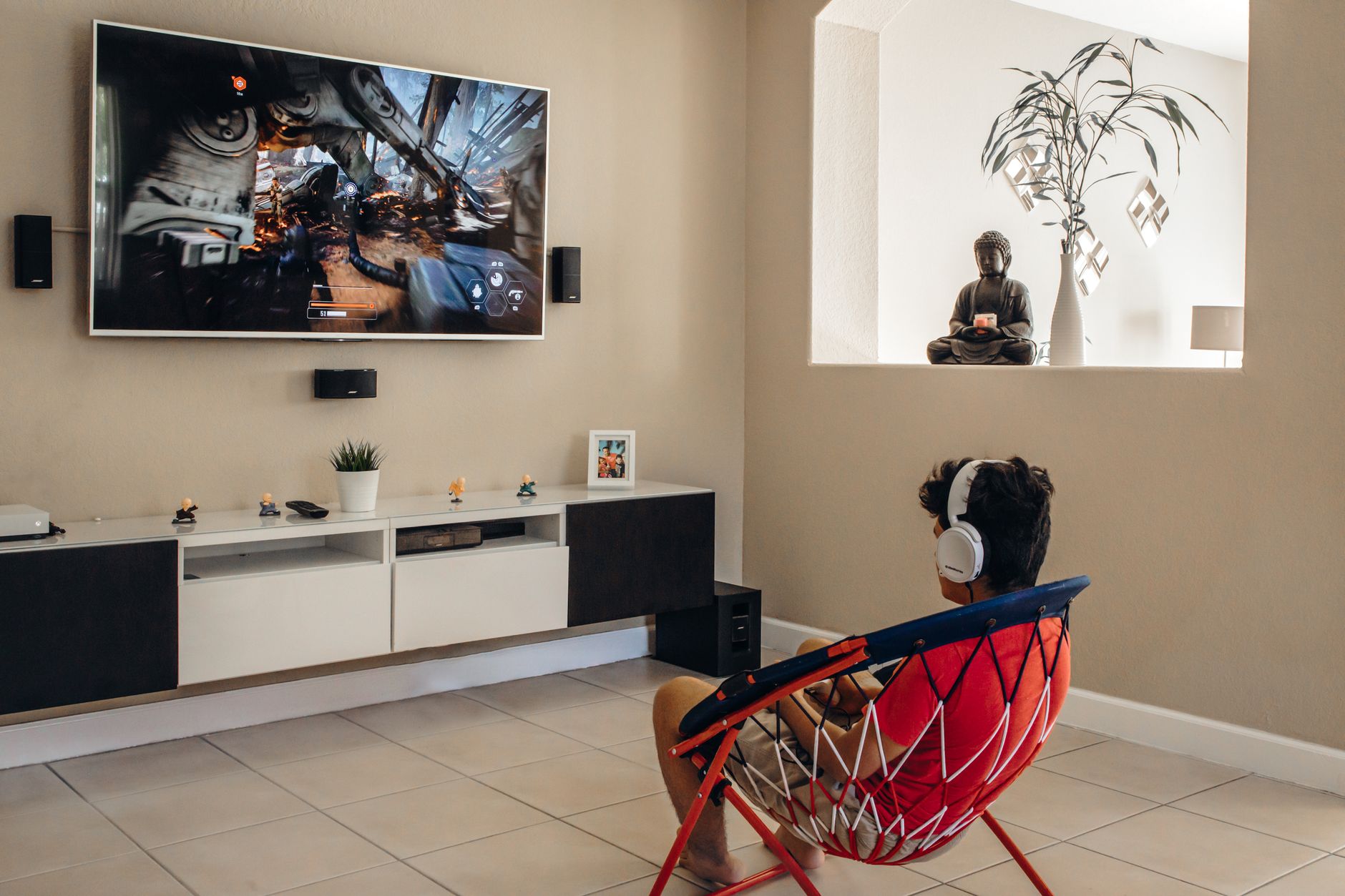
The best soundbars in Australia in 2026 sit at an interesting point in the market: Dolby Atmos object audio has filtered down to sub-$500 price points, Sony and Samsung continue to trade punches at the premium end, and streaming has quietly replaced optical cables as the dominant connection method for most households. If you haven't looked at this category in a couple of years, the gap between a $299 bar and a $1,500 one is narrower than it used to be, and the right choice depends much more on your room than the marketing spec sheet.
What to look for before you buy
Start with your TV's audio output. If your television supports HDMI ARC or eARC, that single cable carries audio back to your soundbar and handles power and volume control from one remote. eARC, in particular, is worth checking for if you want lossless Atmos passthrough from a Blu-ray player or a streaming app running Dolby TrueHD. Without eARC, you're limited to compressed Atmos at best. Most 2024 and 2025 TVs sold in Australia include eARC on at least one HDMI port; check your TV's manual before assuming.
Room size is the second variable most buyers skip. A single-unit soundbar, even a good one, rarely fills a room larger than about 40 square metres convincingly. If your living area is open-plan or stretches past that threshold, factor in whether a model supports wireless rear speakers. Several mid-range Samsung and Sony bars now include optional satellite speakers sold separately, which extends the system without running cables across the floor.
The third consideration is subwoofer placement. Most soundbars in the $300–$800 range include a wireless subwoofer in the box. It doesn't need line-of-sight to the bar, but it does need to be within about 10 metres to maintain a stable connection. Place it on the same side of the room as the bar, ideally in a corner to reinforce bass frequencies without resonance issues.
Top picks by budget tier
Under $400: Sonos Ray
The Sonos Ray remains one of the cleanest options at the entry level. It doesn't support HDMI ARC (optical only), which is a genuine limitation, but the Sonos app gives you multiroom integration if you're already in that ecosystem. Sound staging is surprisingly wide for a compact bar, and the app-based EQ is more transparent than most rivals. It suits smaller rooms, second TVs, and buyers who want simplicity over raw output.
$400–$800: Samsung HW-Q700C
Samsung's Q700C punches above its price. It delivers a genuine 3.1.2-channel configuration with up-firing drivers for Atmos height effects, connects via eARC, and works with Samsung TVs over Q-Symphony, which uses the TV's speakers as additional channels. The wireless subwoofer pairs reliably, and dialogue clarity is well-tuned for streaming content. At around $650 from major Australian retailers, it represents the strongest value in its segment right now.
$800–$1,500: Sony HT-A5000
Sony's HT-A5000 is a 5.1.2-channel bar with Dolby Atmos, DTS:X, and 360 Spatial Sound Mapping. It supports eARC, has a built-in subwoofer alongside a wireless external sub, and pairs with optional Sony RS3S rear speakers for a full 5.1.2 setup. Sony's 360 Spatial Sound Mapping is genuinely effective: it uses the room to synthesise phantom surround channels rather than relying purely on physical driver placement. Worth it if you're watching a lot of Atmos content and don't want a full AV receiver setup.
$1,500 and above: Sonos Arc Ultra
The Sonos Arc Ultra is the clearest recommendation at the premium end for buyers who don't want to manage an AV receiver. It supports eARC and Dolby Atmos, integrates into the Sonos ecosystem without friction, and the new Sound Motion driver technology materially improves bass extension compared to the original Arc. At around $1,699, it's not cheap, but the build quality and software polish justify the premium for most people. Add a Sonos Sub Mini if you want more low-end punch.
Formats explained: Dolby Atmos, DTS:X, and what matters
Dolby Atmos gets the most attention in soundbar marketing, but the implementation varies enormously. Object-based Atmos requires content encoded with height metadata, which you'll find on most Disney+, Netflix, and Apple TV+ originals, plus 4K Blu-ray discs. If your soundbar has up-firing drivers, those drivers bounce height audio off the ceiling. The effect is real but sensitive to ceiling height: standard 2.4-metre Australian ceilings work fine, vaulted or raked ceilings diminish it noticeably. DTS:X offers similar object audio but is less common in streaming; it's mainly relevant for physical media collectors.
Virtual Atmos, labelled things like "Atmos-compatible" or "simulated 3D audio," uses DSP to widen the sound field without physical height drivers. It's better than nothing but not comparable to a bar with actual up-firing drivers. Read the driver count carefully rather than relying on the channel designation printed on the box.
Wireless vs wired connections
Beyond HDMI, most soundbars offer Bluetooth and optical. Bluetooth is fine for music listening but introduces 100–200ms latency, which makes it unsuitable for video sync without a TV that compensates automatically. Optical carries stereo PCM or compressed Dolby Digital 5.1, but it won't pass Atmos. If your TV only has optical out, check whether the soundbar decodes Atmos from the TV's internal apps directly via its own streaming apps, as some premium bars do.
Wi-Fi streaming is now standard on Sonos and high-end Sony and Samsung models. It eliminates Bluetooth latency and supports higher-quality audio codecs. If your soundbar connects over Wi-Fi, keep it on the same network segment as your router, ideally on 5GHz, to avoid buffering during heavy household network use. Understanding how your TV handles these connections also helps: if you've consulted a resource like HDMI version differences before buying a TV, the same cable clarity applies when connecting a soundbar.
What to skip in the specs
Wattage figures are almost meaningless for soundbar comparisons. A 400W soundbar from a budget brand will frequently sound worse than a 120W bar from Sony or Bose. Driver size, cabinet design, and DSP quality determine perceived loudness and clarity, not the peak wattage number. Ignore it entirely.
Similarly, channel counts like "7.1.4" on a single-unit bar are aspirational. Physical drivers are real; virtual channels created by DSP are not equivalent. Count the actual driver positions, check for dedicated up-firing units, and treat the simulated channel count as marketing.
Frequency response specs are routinely measured at different thresholds by different manufacturers. A soundbar claiming "40Hz–20kHz" may be measuring at -10dB, meaning audible bass extension is significantly less than the number implies. Trust reviews using standardised test conditions over published specs.
Australian buying considerations
Warranty coverage in Australia is a practical differentiator. Sonos offers a one-year warranty with Australian consumer law protections layered on top; Sony and Samsung both offer two years on most soundbar products. Major retailers including JB Hi-Fi, Harvey Norman, and The Good Guys stock all the main brands with local repair or replacement options, which matters more than online-only pricing if something fails. Check whether the model is a grey import before buying from a marketplace seller; grey-import units may have different firmware regions or lack Australian power specifications.
Pricing has stayed relatively stable in 2026 despite global supply pressures, with the Australian dollar holding steady enough that import pricing hasn't spiked. Sales events including Click Frenzy and EOFY remain the best windows for discounting on premium models. The Sony HT-A5000 and Samsung Q700C regularly see 15–20% discounts during those windows.
The short version
For most Australian living rooms, the Samsung HW-Q700C at around $650 is the strongest all-round pick: real Atmos drivers, eARC, a solid wireless sub, and no major compromises. Spend more if you're in the Sonos ecosystem or want the best-in-class Atmos performance from the Sony HT-A5000. Spend less with the Sonos Ray if the room is small and simplicity matters more than output. Skip anything from unfamiliar brands claiming outsized watt counts at bargain prices: in soundbars, those numbers are where the marketing budget went.